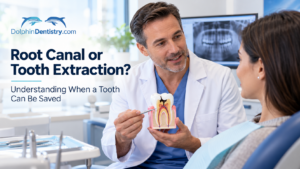


At Dolphin Dentistry in Ottawa, we understand that the thought of a tooth extraction can cause anxiety. Whether you’re dealing with a painful toothache or a dental emergency, knowing what to expect can help ease your worries. This detailed guide covers everything you need to know about tooth extraction in Ottawa, from preparation to aftercare.
Understanding Tooth Extraction
Tooth extraction involves the removal of a tooth from its socket in the bone. While dentists aim to preserve natural teeth, extractions might be necessary for various reasons. These include severe tooth decay, infections, or to make room for orthodontic treatments. Tooth extractions are generally categorized into two types: simple and surgical.
- Simple Tooth Extraction Ottawa: This procedure is used when the tooth is visible above the gum line and the dentist can remove it in one piece. Simple extractions are often performed quickly and with minimal discomfort.
- Surgical Extraction Ottawa: Required when the tooth hasn’t fully erupted or if it’s broken off at the gum line. This type is more complex and may involve making an incision in the gums to remove the tooth.
Why You May Need a Tooth Extraction
You may need a tooth extraction for various reasons, such as:
- Tooth Decay: When decay penetrates to the pulp of the tooth and causes an infection, removal might be the only option.
- Gum Disease: Advanced periodontal disease can loosen teeth, necessitating extraction.
- Crowded Mouth: Dentists may extract teeth to prepare for orthodontics when there’s not enough room for teeth to align properly.
- Infections: If infection reaches the pulp of the tooth and it’s unresponsive to root canal treatment, extraction might be needed.
- Risk of Infection: In individuals with weakened immune systems or undergoing chemotherapy, preventing infection is crucial.
For more detailed insights into situations requiring extractions, you might find our article on what you need to know about tooth extractions in Ottawa useful.
Preparation for Tooth Extraction

Prior to your procedure, your dentist will take an x-ray of the affected area to assess the most effective way to remove the tooth while considering factors like shape, length, and position.
- Medical History Review: Inform your dentist about any medications you are taking and your past medical history, including any illnesses or surgeries.
- Antibiotics: In some cases, antibiotics may be prescribed prior to the procedure, especially if you have a weakened immune system or specific medical conditions.
- Anesthesia Options: Discuss with your dentist which anesthesia options will be used during the procedure. Typically, local anesthesia is sufficient for a simple extraction, but conscious sedation or general anesthesia may be recommended for surgical extractions.
The Extraction Process
Whether it’s a simple or surgical extraction, the procedure usually follows structured steps.
1. Numbing Your Mouth
Local anesthesia is administered to numb the tooth, surrounding gums, and jaw. In cases of surgical extractions, additional sedation options may be used.
2. Tooth Removal
- For Simple Extractions: The dentist uses an elevator to loosen the tooth, followed by a pair of forceps to pull it out gently.
- For Surgical Extractions: An incision is made into the gum, and the bone around the tooth may require drilling or cutting. This complex method ensures safe removal while preventing damage to neighboring structures.
Post-Extraction Care
After your tooth is safely extracted, proper aftercare is crucial to ensure a quick and infection-free recovery.
- Bleeding Control: Your dentist will place a gauze pad over the extraction site to control bleeding. Bite down gently for 30 minutes to an hour.
- Pain Management: You might experience some discomfort following the procedure. Over-the-counter pain medications can help, but always follow your dentist’s guidelines.
- Swelling and Nausea: Ice packs can be applied intermittently for the first 24 hours. If nausea occurs, consult your dentist.
- Diet Considerations: Stick to soft foods and avoid chewing near the extraction site. Avoid straws, as suction can dislodge the clot.
- Oral Hygiene: Maintain oral hygiene but be gentle around the extraction area. Begin gentle saltwater rinses after 24 hours.
- Activity Restrictions: Avoid strenuous activity or heavy lifting for a few days.
For a more comprehensive list of tips, read our piece on after tooth extraction care.
Potential Complications

Though complications from tooth extraction are rare, you should be aware of possible side effects, including:
- Dry Socket: Occurs when the blood clot is dislodged from the socket, exposing underlying nerves and bone.
- Infection: Redness, swelling, fever, or pus can indicate infection.
If you notice continued bleeding, chills, or pain that does not respond to medication, contact Dolphin Dentistry at +1(613) 234-5758 promptly.
Affordable Extraction Options in Ottawa
Understanding the cost of tooth extraction is essential for making informed decisions. At Dolphin Dentistry, we offer transparent pricing and affordable extraction services in Ottawa. We accept various insurance plans and provide flexible payment options. For complex cases or multiple extractions, our general dentistry services in Ottawa may outline additional strategies to manage costs.
Conclusion
Navigating a tooth extraction doesn’t have to be daunting. At Dolphin Dentistry, we’re committed to providing comprehensive care from the initial consultation to post-extraction recovery. If you’re dealing with an emergency extraction or require a surgical tooth removal, contact us to schedule a consultation. Our team is here to ensure your experience is as comfortable and stress-free as possible.
For reliable, science-based guidance on oral health, consider the resources provided by Health Canada. Their “Dental & oral health” section covers preventive dental hygiene, the importance of regular check-ups, and recommendations for safe dental practices — including information relevant to extractions, post-operative care, and long-term oral health maintenance. Integrating these expert recommendations with the restorative and extraction services at Dolphin Dentistry ensures patients receive care consistent with national standards.
For more information on the science of tooth extractions and to debunk common myths, see our article on The Science of Tooth Extractions: Myths vs. Facts.
For additional reading on maintaining oral health beyond extractions, visit our resources on periodontics and gum disease treatments in Ottawa. With the right preparation and aftercare, your tooth extraction in Ottawa can become a simple and straightforward procedure with a swift recovery. At Dolphin Dentistry, we’re here to guide you every step of the way.